 English
 Português
  Deutsch
  Italiano
  Français
  Русский


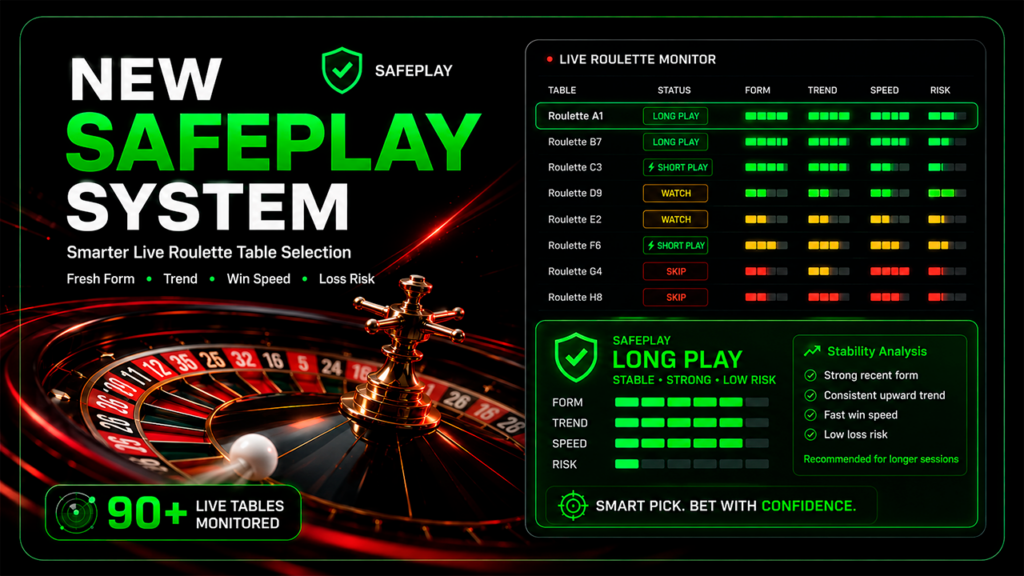
Every day, we work to improve our products, and over the past few months, we’ve implemented a number of changes that we’ve been eager to share with you. One of the most important updates is a significant step forward in game stability thanks to a new system for identifying safe tables to play at.
We previously used a system that recommended the optimal playing time for a table. Its predictions were based on the minimum playing time recorded before the table completely failed.
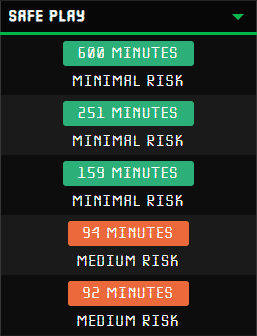
Over time, we realized that this metric wasn’t serving its purpose. It often misled users: the predicted failure might not occur at all, or, conversely, it might happen earlier than the specified time. As a result, it was difficult to know exactly how long the table would remain stable for play.
That is why we have put a lot of effort into improving the overall analytics for the Live tables we track. As a result, we now have detailed statistics for each table, which make it easier to track how the performance of our top analysts has changed over time.
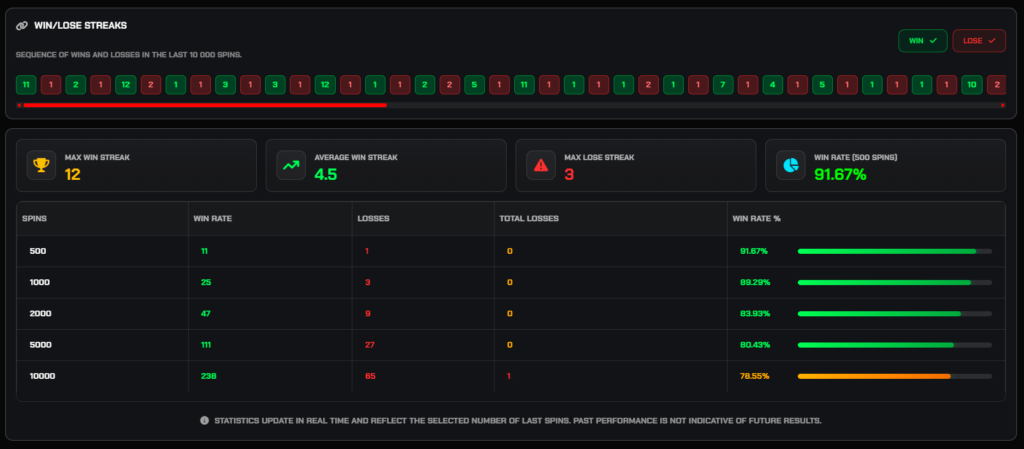
Thanks to this data, we were able to refine our table filtering criteria and significantly reduce the need for users to analyze tables manually. Now, simply by looking at the list of over 90 live roulette tables, you can quickly select the most stable table to play at right now based on a single comprehensive criterion.
Previously, we focused mainly on the win rate, but we didn’t take into account a number of important factors that directly affect the table’s actual stability:
- The latest table shows how well the analyzer is performing right now based on the most recent statistics, rather than just its overall history.
- A shift in the trend —whether performance improves or worsens when comparing short and long periods, such as 500/1,000 spins versus 2,000/5,000 spins.
- Win frequency — the average number of spins it takes for a win to occur within a game series. If wins tend to occur closer to the end of the series, the table may appear stable in terms of win rate, but in reality, it may already be entering a riskier phase.
- Signal activity — how often the analyzer identifies suitable entry points. For example, a 100% win rate based on 15 wins is a stronger indicator than a 100% win rate based on 5 wins.
- Quality of recent events — how well the most recent gameplay events went compared to the table’s past history.
- The risk of a losing streak —the current losing streak, the number of losses in recent events, the presence of a total loss in recent statistics, and the progress of the current gaming series.
- Comparison with the statistical norm —the normal win rate varies depending on the strategy. Therefore, we compare the actual result not only with the spin limit but also with the expected norm for a specific program.
- The table’s ranking among other roulette games —the table is now evaluated not in isolation, but in comparison with other active Live roulette games, so that users can more quickly choose the best option from those available.
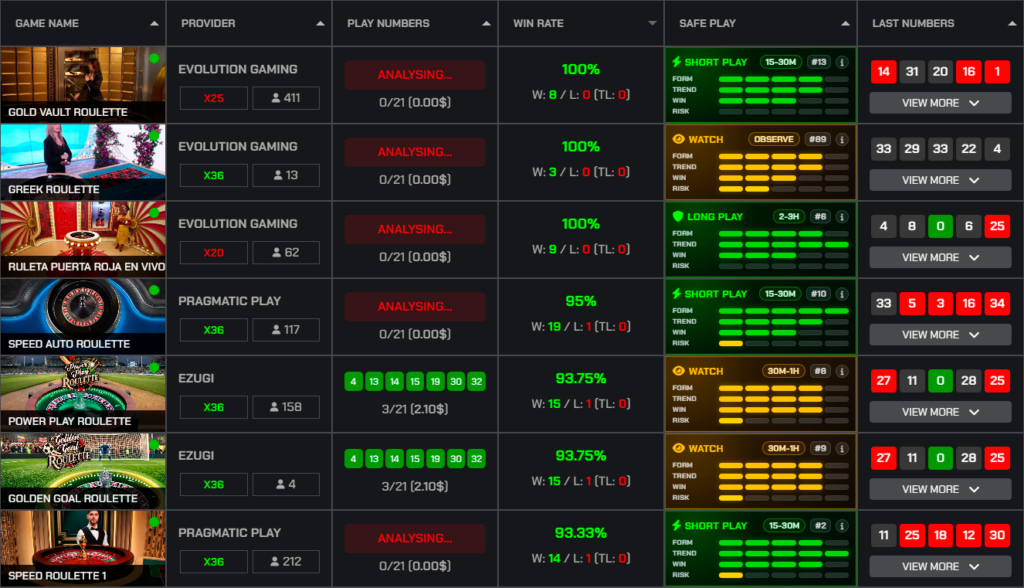
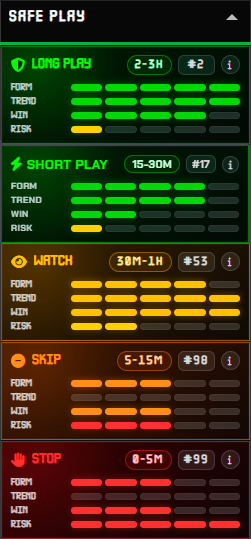
Now, the SAFE PLAY system doesn’t just display a nice-looking win rate; it provides a comprehensive assessment of the current situation at the table. It helps you quickly determine whether a roulette table is suitable for a longer session, a short session, requires further observation, or is best avoided.
Users no longer need to spend a lot of time analyzing table statistics on their own, because the system has already done the heavy lifting. All you need to do is pay attention to the SAFE PLAY status, specifically the indicator color. This new feature has been added to the Karuzo Parallels, Intervals, and Trends analyzers.
Updated profile and guides
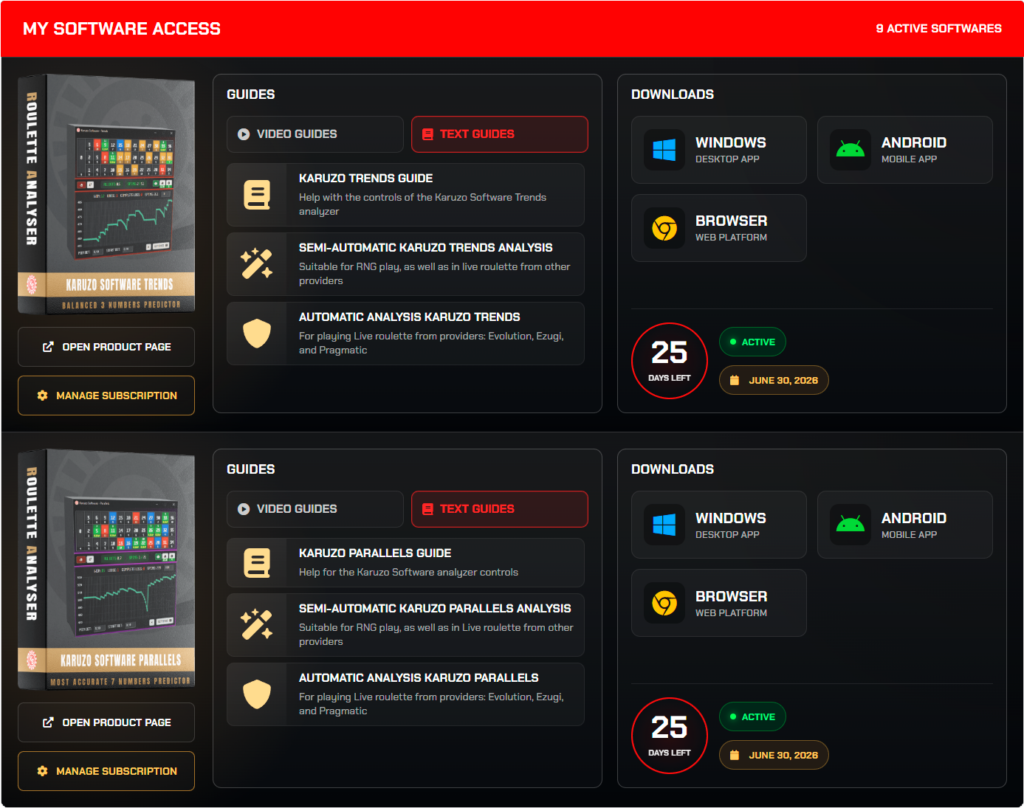
We’ve also updated the user profile. Now, all program access and guides are displayed in your account dashboard, rather than on product pages as they were before. This makes it easier and more convenient to find the information you need.
In addition, the guides have been updated: outdated strategies have been replaced with new recommendations that reflect the latest changes. This will allow you to get started with the software more quickly and make more effective use of analytics without having to sift through large amounts of statistics on your own.
In the future, we plan to create video tutorials for the programs. These will be particularly useful for users who don’t want to delve deeply into text-based instructions and prefer to quickly grasp the basic principles of how the programs work.
A new bot for playing roulette
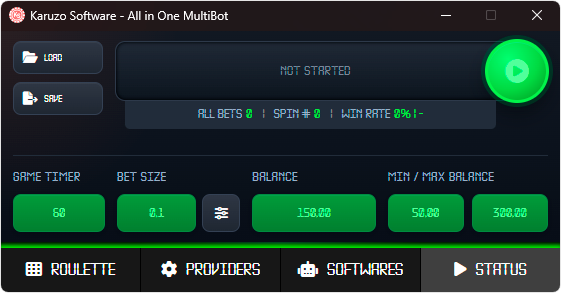
Another important update is the new All in One MultiBot analysis bot. This is a roulette program that generates numbers based on pre-calculated analyses from several of our products: Karuzo Parallels, Signals, Intervals, and Trends. Essentially, this single bot combines our four best analyzers.
The main feature of the new bot is that it can automatically switch between roulette tables and even between providers. This allows for a more flexible approach to automating the gameplay: not lingering too long at a single table and taking advantage of the strongest signals available at any given moment.
The problem with the previous bot was that it often played at the same table and with the same strategy for extended periods of time. Now, thanks to the new SAFE PLAY analytics, selecting reliable tables for 2–3 hours of play has become significantly easier. However, the new bot goes a step further: it can play alternately with different analyzers at different tables, which reduces dependence on any one specific roulette game.
We also save time by switching tables immediately after a game ends. Previously, we had to wait about 20 minutes to receive the next set of numbers to bet on. The current bot receives new signals faster and can move on to the next table immediately after the previous game series. This allows us to use playing time more efficiently and select the strongest signals from the available options.
You can learn more about the new bot’s features on the program page.
When will the project be completed?
We are often asked this question. At every stage following a major update, it seems to us that we have already reached the limits of what is possible, but gradually new ideas, new data, and new ways to improve the system emerge. That is why we are becoming increasingly convinced that there is no limit to perfection.
Artificial intelligence is currently undergoing rapid development, and we are also incorporating elements of intelligent analytics to improve the quality of our products and help users make data-driven decisions more quickly.
Roulette is a chaotic and unpredictable game. Casinos and gaming tables aren’t standing still either: they’re constantly changing, evolving, and adapting. For this reason, it’s impossible to create a roulette program once and for all that will always work equally well and never encounter losing streaks.
Without constantly monitoring the stability of the roulette analysis tool, it is impossible to be certain that the strategy will remain effective over the long term. We identified this factor as a key one long ago, and thanks to constant monitoring, we have achieved a significant improvement in stability when comparing the current stage to where we started.
In any case, playing roulette always involves risk. We’re working on our analysis tools because we love roulette and are creating resources for fellow enthusiasts who need user-friendly and reliable calculators to analyze the game.

This is fantastic news! Improved game stability is always a win for us players. I’m eager to see how these changes enhance my gaming experience.
Absolutely! Stability makes a world of difference, especially during those intense gaming sessions.
I’m really excited about this update! Stability issues can be so frustrating, so it’s great to see you addressing them head-on. Looking forward to playing without worrying about unexpected crashes.
Absolutely agree! Nothing ruins a good gaming session like a sudden crash. Let’s hope for smoother sessions from now on.
I’m thrilled to hear about these stability improvements! It’s always a better gaming session when things run smoothly. Kudos to the team for their hard work!
It’s always refreshing to see updates focused on improving the core gaming experience. Stability is key, and knowing that it’s being prioritized makes me feel more confident in the platform.
Absolutely, a stable game definitely makes the experience much more enjoyable and stress-free!